Guide
Smart Contracts Explained: Programs That Run Themselves
Bottom line: automatic, code-enforced agreements
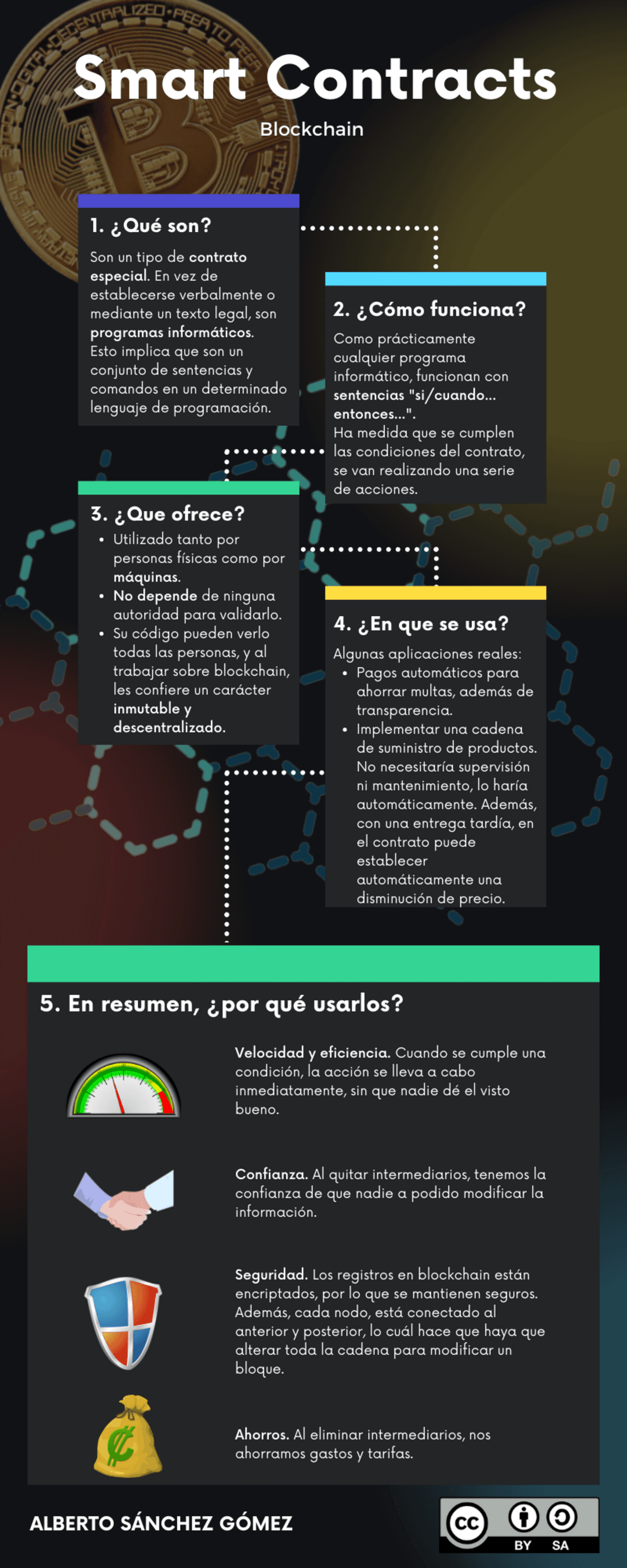
A smart contract is a program stored on a blockchain that executes automatically when its conditions are met. Think of a vending machine: put money in, get the item out — no person needed.
Key takeaways
Smart contracts run on chains like Ethereum. They can't be tampered with, anyone can verify them, and they power DeFi and NFTs.

What they enable
- DeFi — automated lending and trading
- NFTs — issuing and transferring ownership
- DAOs — rules encoded in code
Pros and cautions
| Pros | Cautions |
|---|---|
| No middleman, runs automatically | Bugs execute too — and can't be undone |
| Transparent and verifiable | Hard to change once deployed |
"Code is law" cuts both ways
A smart contract does exactly what its code says — including bugs. Prefer audited, well-known contracts.
Sources
- Ethereum — smart contracts: https://ethereum.org/en/smart-contracts/
Not financial advice
This article is for information only and is not investment advice. Crypto assets are volatile and carry risks including hacking. Do your own research and only use money you can afford to lose.
FAQ
- What is a smart contract?
- A smart contract is a program stored on a blockchain that executes automatically when its conditions are met. Like a vending machine, it delivers the outcome without a person in the middle.
- Where do smart contracts run?
- On blockchains such as Ethereum. Because the code lives on the chain it cannot be tampered with, and anyone can verify it.
- What are smart contracts used for?
- They power DeFi (automated lending and trading), NFTs (issuing and transferring ownership) and DAOs (rules encoded in code).
- What are the risks of a smart contract?
- A smart contract does exactly what its code says, so bugs execute too and cannot be undone, and a deployed contract is hard to change. Prefer audited, well-known contracts.
This article is informational only and is not financial, investment, or trading advice. Prices are reference snapshots and may be outdated. Always do your own research.