As of 16 July 2026, rwa.xyz showed the RWA tokenization market at $34.32B on a distributed basis with stablecoins boxed separately, or roughly $334B including its $299.40B stablecoin total. Estimates differ by an order of magnitude because of three counting decisions: whether stablecoins are included, whether you read distributed or represented value, and whether you are quoting today's balance or a consultancy's 2030-plus forecast.
An "RWA tokenization platform" is really four separate jobs — fund management, issuance and transfer agency, custody, and trading — and almost no company does all four. As of July 2026, nearly every live product is gated to institutional or accredited investors, with Franklin Templeton's Benji Investments app among the few retail doors.
A smart contract audit is a scoped, point-in-time review of code at a specific commit — evidence that experts looked, not proof that the code is safe. Nomad ($190M, 2022), Euler ($197M, 2023), Cetus ($223M, 2025) and Balancer V2 ($128M, 2025) were all audited before being drained (DefiLlama, as of 2026-07-16), so the useful question is never "was it audited?" but "what was in scope, at which commit, and which findings were actually fixed and re-reviewed?"
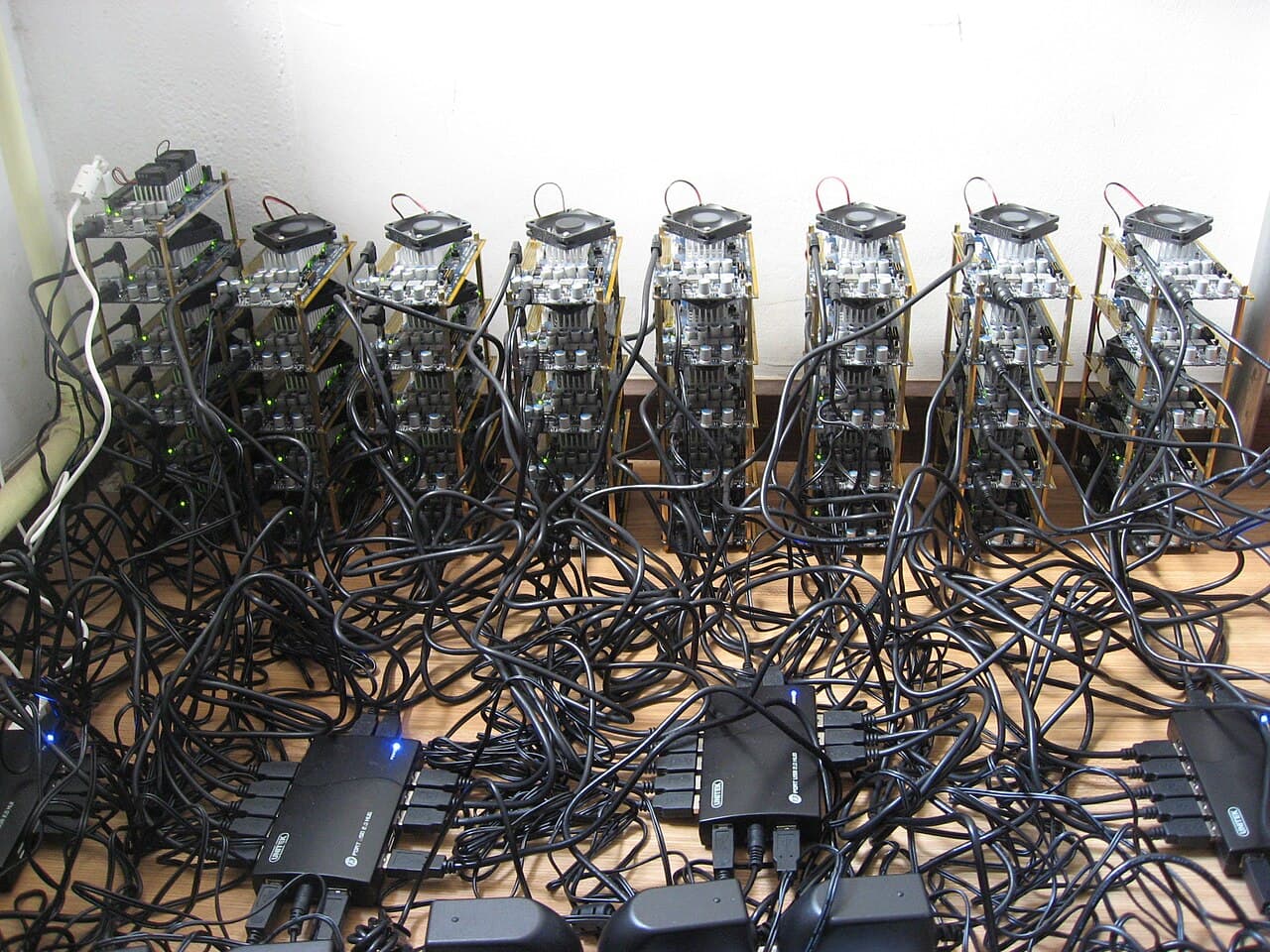
DePIN mining means earning tokens for contributing a verified real-world resource — wireless coverage, storage, GPU time, map data — rather than competing to compute hashes as in proof-of-work. As of 2026-07-16 no primary source publishes a current per-device reward rate, and Helium has approved (but not yet deployed) the retirement of Proof-of-Coverage on both its networks, so a payback period cannot honestly be calculated.
DePIN networks sort into Physical Resource Networks (location-bound: wireless, mapping, positioning, weather, vehicle data) and Digital Resource Networks (deliverable remotely: storage, compute, bandwidth). This directory covers only the 14 networks whose resource, chain, ticker and status were confirmed against primary documentation as of 16 July 2026.
The transfer leg of a stablecoin remittance is typically network-fee-only and can beat a bank wire's stacked fees/FX spread, but counting the fiat on-ramp/off-ramp cost, the total isn't automatically cheaper — it depends on amount and conversion method.
JPYC is a privately issued, already-trading yen-pegged "electronic payment instrument." Japan's digital yen (CBDC) would be issued by the Bank of Japan itself and remains in the pilot stage as of 2026, not yet issued. The core differences are issuer, backing, legal status, and current status.
US spot BTC ETFs saw ~$4.4B of net outflows over 13 trading days from mid-May through early June 2026 (among the largest since the 2024 launch), ending June 4, 2026. A separate 10-day, ~$2.73B outflow streak reportedly ended in early July 2026 (around July 2–3) with a $221.7M inflow day, and flows stayed net positive into the following days as BTC recovered toward $62,000 amid cooling Fed rate-hike expectations. A brief ~$510M, 3-day inflow streak (July 6-8) then reversed: -$84.9M on July 8 and -$95.3M on July 9, 2026 (BTC+ETH funds combined -$147.5M that day), with BTC trading above $63,000. Two straight positive weeks followed (+$197M w/e Jul 10, ending an 8-week outflow streak; +$75.7M w/e Jul 17), but June's full-month total (~$4.1-4.5B net outflows) still leaves 2026 YTD flows negative by roughly $5.2-5.4B through mid-July. A 7-day, ~$1B inflow streak (through July 22) broke on July 23 with a -$225M outflow day (IBIT -$202.5M), but the week still closed net positive (+$274M); one tracker put 2026 YTD outflows at roughly $4.84B as of July 21.
Japan now has two live yen stablecoins — JPYC (Type II fund-transfer, since October 2025) and JPYSC (Type III trust-backed, since June 24, 2026) — plus a joint MUFG/Mizuho/SMBC megabank project reportedly targeting live transactions by March 2027. JPYC targets retail payments with a roughly ¥1M/day issuance-redemption cap per user; JPYSC has no transaction cap and targets institutional/B2B use.
Bottom line: on FSA-registered Japanese exchanges you can buy crypto from just a few hundred yen. Start with money you can afford to lose, buy one coin in a tiny amount, and learn the mechanics before you scale up.
Bottom line: A wallet is a holder for the private keys that control your crypto. Use a hot (software) wallet for daily, small amounts and a cold (hardware) wallet for long-term, larger holdings. Match the wallet to the amount and use, and guard your recovery phrase above all — lose the keys, lose the coins.
Bottom line: Most crypto scams fall into four types — social-media investment scams, fake support, wallet drainers, and rug pulls. The core defense: use registered exchanges only, never share your private key, and never sign or approve blindly. Losses hit record highs in 2025 — treat every 'sure thing' as a scam.
Bottom line: The safe path is registered exchange → KYC → 2FA → buy small → self-custody when amounts grow. Stick to FSA-registered platforms, secure the account before you buy, start with money you can afford to lose, and keep records.
Bottom line: In Japan, crypto profits are generally taxed as miscellaneous income under progressive rates (up to ~55%), triggered when you sell, swap, spend, or receive rewards. A December 2025 tax-reform outline proposed a flat 20% separate tax — but it is not yet law. Always confirm with Japan's NTA or a tax professional.
As reported, SBI issued a ~¥10B on-chain bond in Feb 2026 with XRP rewards for qualifying retail buyers — a bridge between traditional bonds and blockchain.
As reported, Metaplanet raised ~$50M in zero-interest bonds on 2026-04-24 to buy more Bitcoin; holdings topped 40,000 BTC. Buying with debt carries real downside risk.
Bottom line: As reported, in March 2026 Japanese exchange bitFlyer's 24-hour volume surged ~200%, outpacing Coinbase and Binance, as Japanese traders rotated into Bitcoin during an equity selloff.
Bottom line: As reported, in March 2026 SBI VC Trade launched regulated lending of the USD stablecoin USDC, with a high intro yield that is capped and time-limited; standard rates are lower. Lending is not principal-guaranteed.
Bottom line: As reported, JPYC — Japan's regulated yen stablecoin — became usable in LINE NEXT's Web3 wallet 'Unifi,' bringing a yen stablecoin to LINE's large user base.
Bottom line: As reported, if Japan's reclassification of crypto as a financial instrument takes effect in FY2027, first spot crypto ETF approvals could come as early as FY2028. Market-size estimates vary and are not fixed.
Bottom line: As reported in May 2026, SBI presented plans for spot Bitcoin and XRP ETFs and a 'digital gold' trust for a Tokyo Stock Exchange listing. It depends on FSA approval; no listing date was given.
Bottom line: As reported, Japan's FSA plans to require licensed crypto exchanges to hold liability reserves against hacks and operational failures, following the 2024 DMM Bitcoin hack, with legislation aimed at the 2026 Diet.
Bottom line: As reported, Japan's bill to treat crypto as a financial instrument cleared the Lower House on 2026-06-11 and moved to the Upper House, adding insider-trading rules and issuer disclosure.
Bottom line: In March 2026 the Bank of Japan announced a sandbox testing settlement in central-bank money on a blockchain, as it weighs whether to issue a retail digital yen this year. No decision has been made.
Bottom line: On 2026-06-10 MUFG, SMBC and Mizuho signed a memorandum toward a jointly issued yen stablecoin, reportedly using a trust structure on shared infrastructure, targeting live use within FY2026.
Bottom line: Japan's 2026 tax-reform blueprint proposes replacing progressive rates up to ~55% with a flat 20% separate tax on crypto gains — but, as reported, only for 'specified crypto assets' handled by registered businesses.
Bottom line: In April 2026 Japan's Cabinet approved a bill moving crypto oversight from the Payment Services Act to the Financial Instruments and Exchange Act (FIEA), reportedly covering ~105 tokens — a foundation for spot crypto ETFs and a flat 20% tax.
Bottom line: SBI VC Trade began distributing Ripple's US-dollar stablecoin RLUSD in Japan on March 31, 2026 — a concrete example of a foreign-issued stablecoin being handled under Japan's revised Payment Services Act.
Bottom line: JPYC, Japan's first regulated yen stablecoin, passed 2.5 billion yen in cumulative issuance and about 18,000 accounts by May 2026, and closed a Series B of roughly 4.6 billion yen — circulating as 'money in motion.'
Bottom line: The total market cap of dollar-pegged stablecoins reached a record above $320 billion in 2026 — even as the broader crypto market dropped — underscoring demand for them as payment rails and a parking spot.
Bottom line: In April 2026, about $292 million of rsETH was stolen from a cross-chain bridge used by KelpDAO (built on LayerZero). It was not a smart-contract bug — it came from a single-verifier setup and compromised off-chain infrastructure.
Bottom line: if you spot a crypto scam or drain, first stop the bleeding (revoke approvals, move funds). Then preserve records and contact the police (#9110), the consumer hotline (188), and the FSA. Never trust anyone promising to 'recover' your funds — that's a second scam.
Bottom line: a tokenomics page shows 'who holds what, and when' and 'where value comes from.' Read four things — total supply, allocation, vesting, and circulating supply — and you can spot red flags like excess sell pressure or concentration yourself.
Bottom line: a hardware wallet keeps your private keys offline. Get the setup right — buy official, set a PIN, store the recovery phrase on paper — and self-custody becomes far less daunting. Here's each step.
Bottom line: a bridge moves assets between blockchains, but it locks huge sums in one place — making it the single biggest hacking target. Several bridges have lost hundreds of millions. If you use one, keep it small and brief.
Bottom line: using DeFi or NFTs means granting apps an 'approval' to move your tokens. Left unchecked, that's the doorway a malicious contract uses to drain you. Periodically revoke unused approvals with revoke.cash or Etherscan.
Bottom line: a block explorer (like Etherscan) is a free public viewer for every transaction on a blockchain. You can confirm whether a transfer arrived, what the fee was, and whether an address is real — without waiting on support.
Bottom line: an airdrop is when a project distributes free tokens to users, usually to reward early activity or bootstrap a community. Real airdrops exist, but 'claim your airdrop' is also one of the most common scam lures — never connect your wallet or sign to claim something you didn't expect.
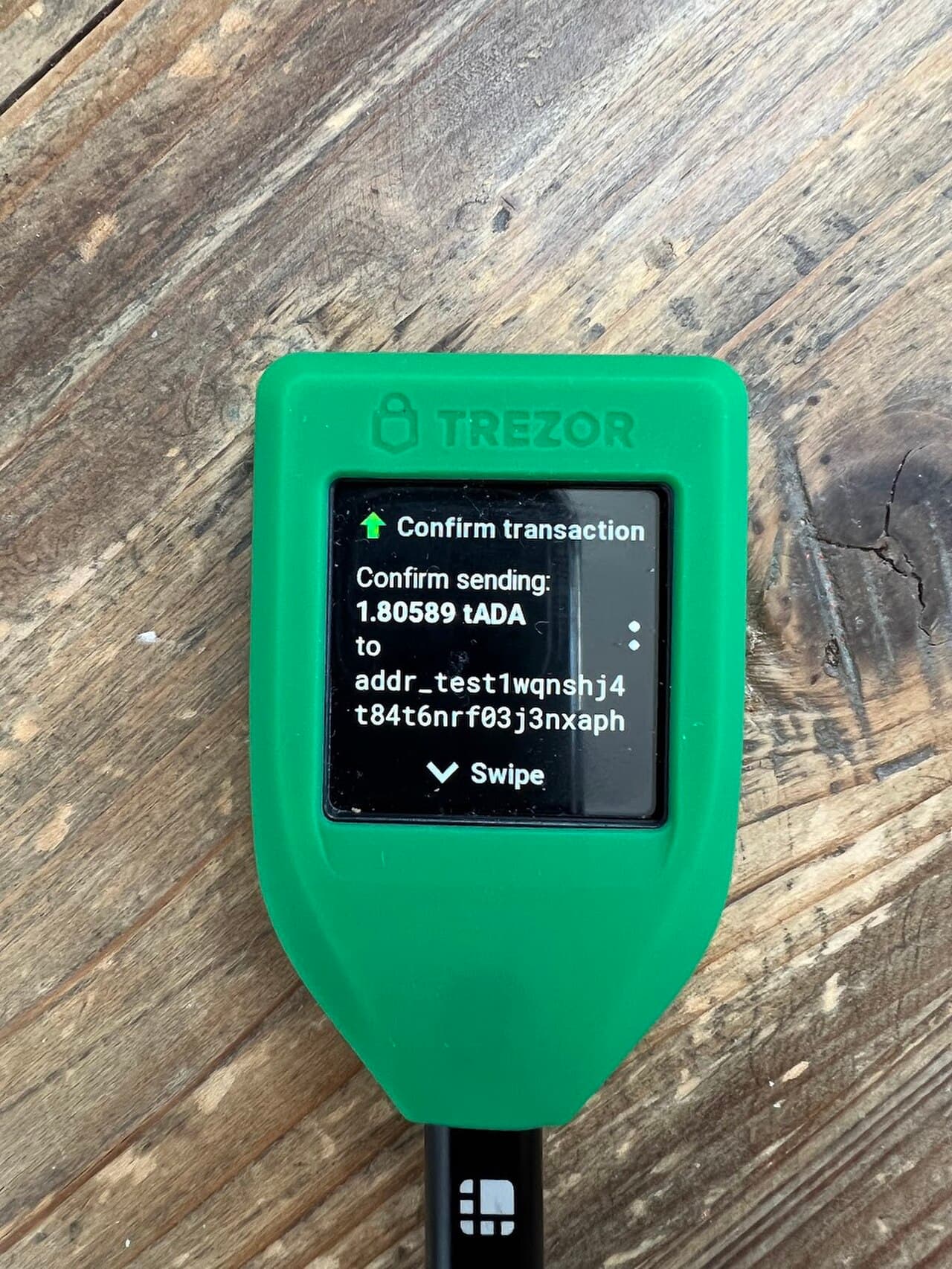
Bottom line: a hardware wallet is a small physical device that stores your private keys offline and signs transactions inside the device, so your keys never touch an internet-connected computer. It's the strongest everyday protection against remote theft — but it can't save you from approving a malicious transaction yourself.
Bottom line: a market order buys/sells right now at the best available price (fast, but the price isn't fixed); a limit order sets the exact price you'll accept (price control, but it may not fill). Beginners usually start with small market orders or simple limit orders.
Bottom line: KYC (Know Your Customer) is the identity check an exchange runs before you can trade — ID, a selfie, and your details. In Japan it's legally required, and it's a sign you're using a registered, regulated exchange rather than a risky one.
Bottom line: the biggest threat to individuals in 2026 is the 'approval/signature' drainer — fake dApps that get you to approve or sign a malicious transaction, then drain your wallet. They don't steal your key; they get you to authorize the theft. Never approve what you don't recognize.
Bottom line: Japan Exchange Group (JPX) is reportedly preparing to list crypto ETFs as early as 2027. Its CEO says the trading infrastructure is largely in place — the remaining hurdle is the legal and tax framework, namely the shift of crypto under the FIEA.
Bottom line: SBI Shinsei Trust Bank is set to ISSUE JPYSC, a yen-pegged stablecoin built by Startale and distributed by SBI VC Trade, targeting a Q2 2026 launch pending FSA approval. It's backed by a trust structure and aimed first at corporate payments.
Bottom line: for beginners, start with a registered, regulated exchange in your jurisdiction, then weigh security history, fees, supported assets, and ease of use. In Japan, that means an FSA-registered exchange — not an unregistered offshore site.
Bottom line: Web3 is a proposed next phase of the internet where users can own digital assets and identity via blockchains, rather than renting everything from big platforms. It's a promising idea that's still early — and full of both real building and hype.
Bottom line: your public key is like an account number you can share to receive funds; your private key is the secret that authorizes spending. Whoever holds the private key controls the funds — so guarding it is the whole game.
Bottom line: in a centralized system one party is in charge and you must trust it; in a decentralized one, many independent participants share control, so no single party can change the rules or freeze your funds. That trade-off is the heart of crypto.
Bottom line: Tokyo-listed Metaplanet has reportedly become one of the world's largest corporate Bitcoin holders and agreed to acquire Siiibo Securities — aiming to offer Bitcoin-linked products to Japanese investors.
Bottom line: SBI Holdings has reportedly outlined plans for spot ETFs holding Bitcoin and XRP, designed for a Tokyo Stock Exchange listing. It would be Japan's first crypto ETF — but it depends on the law changing and regulatory approval.
Bottom line: on June 11, 2026, Japan's Lower House passed a bill moving crypto from the Payment Services Act into the Financial Instruments and Exchange Act — opening a path to insider-trading rules, ETFs and a lower tax rate. The Upper House vote is still ahead.
Bottom line: you buy crypto by opening an account at a registered exchange, passing identity verification (KYC), depositing fiat, and placing an order. Start small and only with money you can afford to lose.
Bottom line: the Bank of Japan is expected to decide in 2026 whether to issue a digital yen (CBDC), but it has not committed to launching one. The pilot continues; the decision is still ahead.
Bottom line: Japan's FSA put rules into force on June 1, 2026 that recognise qualifying foreign trust-type stablecoins as electronic payment instruments — widening the legal path for stablecoins to circulate in Japan.
Bottom line: smart contracts run automatically, which is powerful — but a bug or design flaw runs automatically too, and funds can be drained or stuck. 'Audited' is not a guarantee of safety.
Bottom line: crypto is inheritable property and subject to inheritance tax in Japan. But if your family doesn't know the private keys or access, it can be effectively lost. Preparing in advance matters a lot.
Bottom line: a depeg is when a stablecoin's price drifts from the fiat it should track (e.g. $1). Some have collapsed badly in the past — 'stable' is not absolute.
Bottom line: MEV is the profit available to whoever orders transactions in a block, by rearranging or inserting them. For ordinary users it can show up as an invisible cost — worse execution prices.
Bottom line: liquidation is when a leveraged position is force-closed because losses exceed your margin. You can lose your funds in an instant — it's the biggest thing to watch.
Bottom line: perpetual futures are futures with no expiry, so you can hold a position indefinitely. They let you use leverage — but the risk of forced liquidation is high, especially for beginners.
Bottom line: Bitcoin aims to be a store of value ('digital gold'); Ethereum aims to be a platform that runs apps ('the world computer'). They have different goals — not better or worse.
Bottom line: a CBDC is a digital version of a country's official money, issued by its central bank. It is very different from volatile crypto or privately-issued stablecoins. Japan is studying a 'digital yen'.
Bottom line: tokenomics is the economic design of a token — its supply, distribution, utility and incentives. It often matters more than the price chart for judging whether a project can last.
Bottom line: restaking lets you reuse already-staked ETH to also help secure other services, aiming for extra rewards. It drew big attention from 2024 — but the risks stack up too.
Bottom line: yield farming is the general term for putting crypto to work in DeFi to earn a return — through lending, providing liquidity, and more. Yields can be high, but so are the risks.
Bottom line: impermanent loss (IL) is the hidden cost of providing liquidity in DeFi — when the price of your deposited assets moves, you can end up with less value than if you'd just held them.
Bottom line: major overseas exchange Bybit reportedly plans to wind down services for Japanese residents in 2026, amid the FSA's tighter scrutiny of unregistered exchanges.
Bottom line: Japan is discussing moving crypto from the Payment Services Act to the Financial Instruments and Exchange Act — treating it as an investment product like stocks. A potentially historic shift.
Bottom line: exchanges serving Japan must be FSA-registered and follow strict rules on customer-asset protection — generally making them a safer on-ramp.
Bottom line: staking means locking crypto to help secure a Proof-of-Stake network and earn rewards. It's a bit like interest — but with lock-ups and slashing risk.
Bottom line: a stablecoin is a crypto asset pegged to a currency like the US dollar. Useful for transfers and as a 'safe harbor' — but the peg can break.
Bottom line: DeFi recreates financial services — trading, lending, saving — using smart contracts instead of banks. Powerful, but the risks are yours to manage.
Bottom line: Ethereum is a blockchain you can run programs on. If Bitcoin is digital gold, Ethereum is the foundation for decentralized apps. Its currency is ETH.
Bottom line: Bitcoin is the first cryptocurrency, created in 2008. With a fixed supply of 21 million, it's often called 'digital gold' and is best known as a store of value.
Bottom line: in Japan, crypto gains are generally treated as 'miscellaneous income' and taxed. Always confirm details with the National Tax Agency or a professional.
Bottom line: your security is your keys. Never share your seed phrase, store it offline, beware of phishing — and consider a hardware wallet for larger holdings.
Bottom line: a wallet stores the keys that control your crypto. Hot wallets are convenient for daily use; cold wallets are safer for larger, long-term holdings.
Bottom line: a blockchain is a shared ledger that everyone keeps a copy of, making records practically impossible to alter — even without a central administrator.
Bottom line: cryptocurrency is digital money and assets managed on a blockchain, without a central bank or company in control. It can be sent worldwide over the internet.
Bottom line: from being home to the first big Bitcoin exchange to a thriving NFT and gaming scene, Japan has been central to crypto's story — and is shaping its future.
Bottom line: open an account at an FSA-registered exchange, complete identity verification, deposit JPY, then buy. Always enable two-factor authentication.
Bottom line: Japanese crypto exchanges must register with the FSA and follow strict rules on asset segregation and cold storage — making Japan a relatively well-protected market.
Bottom line: Japan is one of the most clearly regulated crypto markets in the world. Exchanges must register with the FSA, customer assets are protected, and a vibrant Web3 scene is growing.
Bottom line: in 2026 Web3 is decisively moving from flashy speculation to real-world utility and institutional adoption — embodied by RWA, DePIN, AI and ownership gaming.
Bottom line: AI and crypto are converging — decentralized compute, AI agents that pay in crypto, and tokenized data. It's one of 2026's most-watched narratives.
Bottom line: blockchain gaming is shifting from 'play to earn' to 'play and own' — truly owning in-game characters and items as NFTs you can use across worlds.
Bottom line: DePIN uses token rewards to let people collectively build real infrastructure — wireless, mapping, computing. It's Web3 expanding into the physical world.
Bottom line: RWA means putting real-world assets — bonds, real estate, cash — on a blockchain as tokens. In 2026 it's a major bridge between traditional finance and DeFi.
Bottom line: JPYC is a yen-pegged stablecoin from Japan. Reported as the first regulated yen stablecoin, it aims for a 1:1 yen peg and works across several blockchains.
Bottom line: in 2026 yen-denominated stablecoins are becoming real in Japan. JPYC is already live, while SBI and Japan's three megabanks are moving in — a new phase for the digital yen.
Bottom line: you buy NFTs on a marketplace by connecting your wallet. Impersonation is rampant, so verifying official links and 'verified' collections matters most.
Bottom line: a gas fee is the cost of doing something on a blockchain. Fees rise when the network is busy — use Layer 2, off-peak times, and batching to save.
Bottom line: a CEX is run by a company (easy, with support); a DEX runs on smart contracts (no middleman, but self-custody and self-responsibility). Beginners usually start with a CEX.
Bottom line: Layer 2 networks process transactions off the main chain and settle back to it, cutting fees and congestion while keeping the base layer's security.
Bottom line: 'altcoin' means any cryptocurrency other than Bitcoin. There are thousands, ranging from serious platforms to worthless or scammy tokens — research carefully.
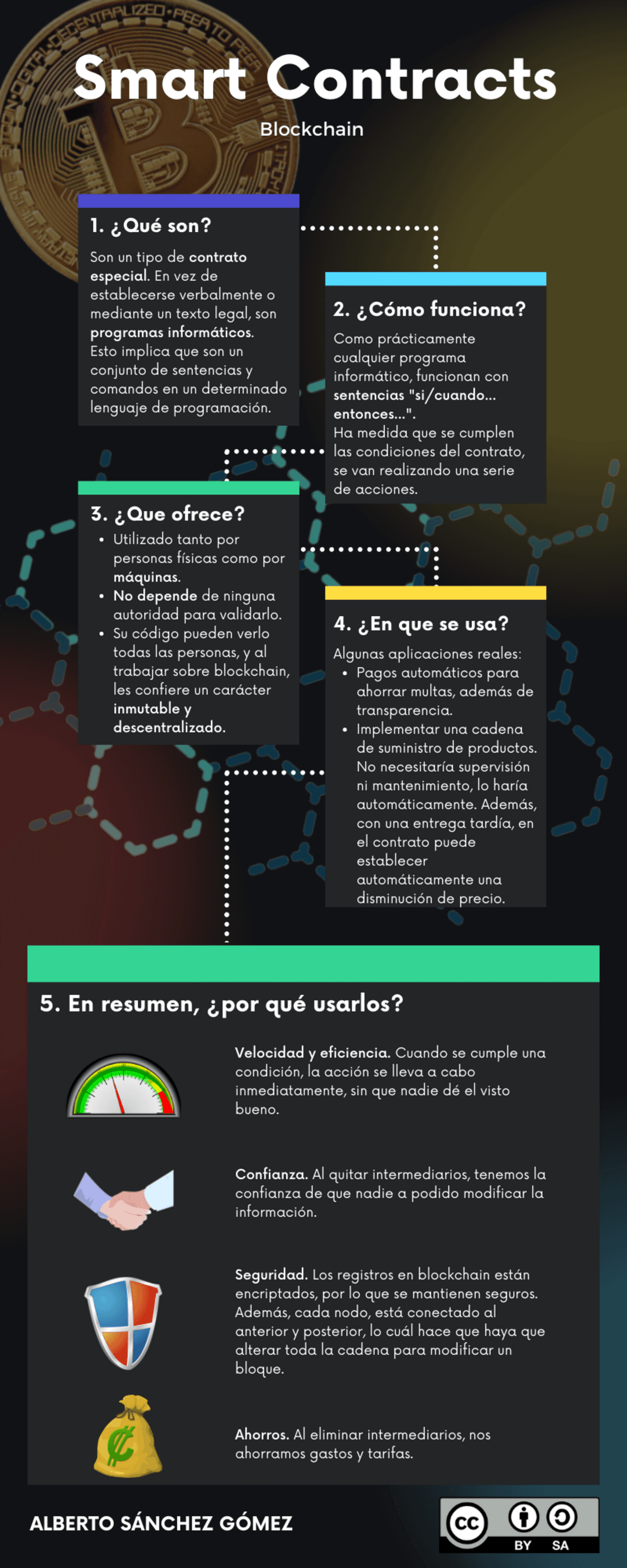
Bottom line: a smart contract is a program on a blockchain that runs automatically when conditions are met — no middleman. It's the engine behind DeFi and NFTs.
Bottom line: HODL means holding through the ups and downs rather than trading short-term. It avoids the difficulty of timing — but holding doesn't guarantee gains.
Bottom line: DCA means buying a fixed amount on a regular schedule. You buy less when prices are high and more when low, smoothing your entry — but it's not a profit guarantee.
Bottom line: volatility is how much a price moves. Crypto is highly volatile — moving sharply both up and down. Use spare money, a long horizon and diversification.
Bottom line: you send crypto to a wallet address. Transfers can't be reversed, so always double-check the address and network, and send a small test first.
Bottom line: 2FA adds a second check beyond your password, dramatically reducing account takeovers. For crypto it's essential — and an authenticator app is safer than SMS.